Introduction
In the rapidly evolving landscape of 2026, telehealth billing has transitioned from a temporary pandemic-era convenience to a permanent, sophisticated pillar of modern healthcare delivery. For MarkLab Inc. clients, mastering the intricacies of virtual reimbursement is no longer optional; it is essential for maintaining a healthy revenue cycle. Navigating the maze of CPT modifiers, varying payer policies, and the distinction between audio-only and video visits can be daunting. This comprehensive guide provides a clear roadmap to the latest telemedicine billing guidelines, ensuring your practice captures every dollar earned while remaining fully compliant with updated federal regulations. We promise to break down the technical barriers, providing you with the exact codes and documentation strategies needed to thrive in a digital-first environment.
Deep Explanation of Telehealth Billing
Understanding the current state of telehealth billing requires a granular look at how place of service (POS) codes and modifiers have shifted since the formal end of the Public Health Emergency. In 2026, the distinction between POS 02 and POS 10 is the most frequent source of claim denials. POS 02 is now strictly reserved for telehealth provided in locations other than the patient’s home, such as a dedicated clinic or a regional facility. Conversely, POS 10 is utilized when the patient is receiving care in their private residence. Failure to differentiate these can lead to immediate automated rejections.
Telehealth Coding Requirements for 2026
To secure virtual visit reimbursement, providers must use specific CPT codes that reflect the complexity and duration of the encounter. Most evaluative services fall under the 99202–99215 series, but they require the appropriate modifier to signify the service was remote. While Medicare has streamlined many of its permanent telehealth lists, commercial payers often require telehealth coding requirements that include modifier 95 for synchronous real-time audio-video visits. As we move deeper into the year, digital health coding trends suggest a shift toward more specialized HCPCS codes for remote monitoring and chronic care management that occur between traditional appointments.
Audio-Only vs. Video Visit Billing
One of the most significant 2026 telehealth updates involves the permanent adoption of audio-only codes for behavioral health, though physical medicine remains more restricted. Codes 99441–99443 cover telephone evaluation and management services. However, these are strictly time-based and require that the provider not have a related E/M visit within the previous seven days. For video visits, the standard of care remains high-definition, HIPAA-compliant platforms. Providers must document that both audio and video were functional throughout the encounter to justify the higher reimbursement rates associated with billing for remote services.

Real Examples / Case Study
Consider a mid-sized multi-specialty group that struggled with a 22% denial rate on virtual claims during the first quarter of 2025. The challenge was twofold: inconsistent use of POS codes and missing documentation regarding patient consent. By partnering with MarkLab Inc. for outsourced RCM for telehealth, the group implemented a standardized intake process where consent was captured digitally before the encounter. We applied medical billing solutions that automated the scrubbing of POS codes based on the patient’s registered home address. The results were transformative: within six months, the denial rate dropped to 3.5%, and the practice saw a 14% increase in overall telehealth revenue due to the accurate capture of prolonged service codes that were previously overlooked.
Visual Breakdown: The 2026 Telehealth Billing Workflow
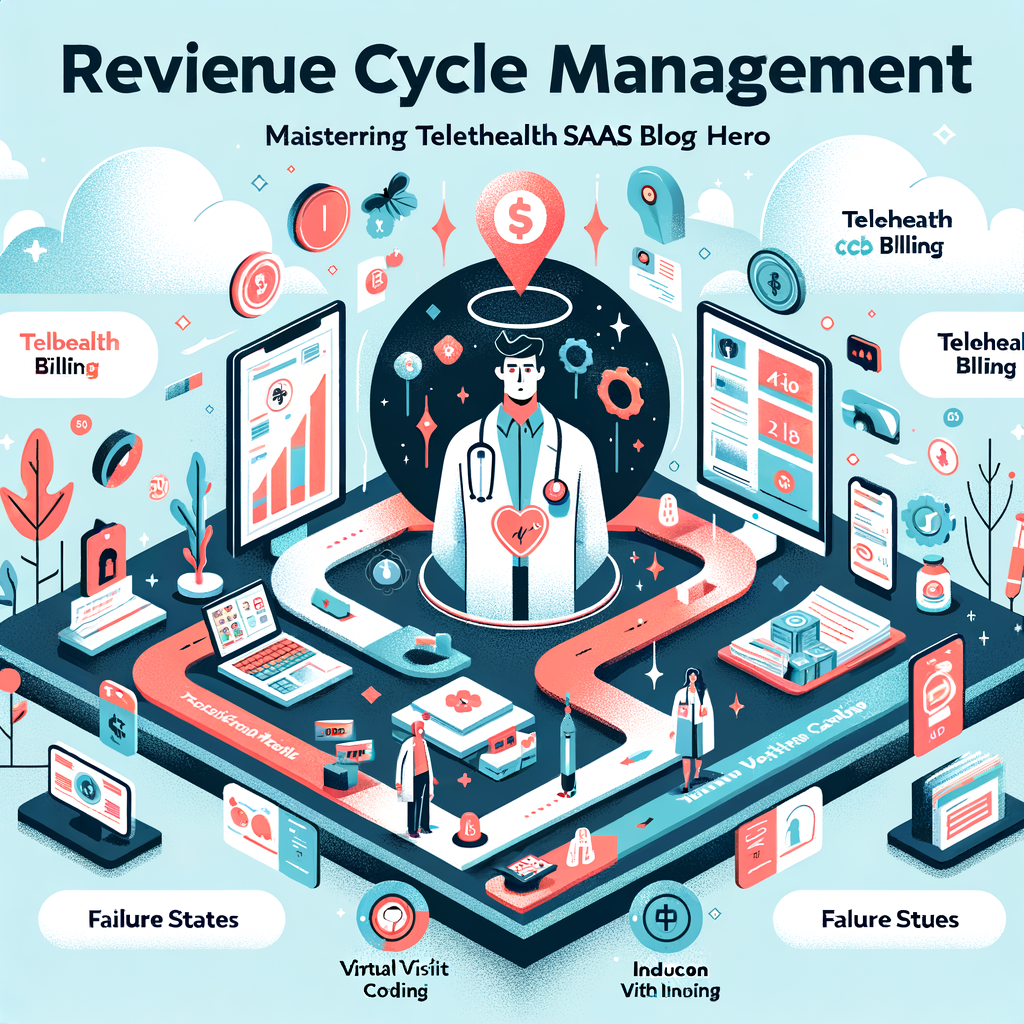
Efficiently managing a virtual visit requires a structured workflow to ensure that the telehealth billing cycle remains uninterrupted. The process begins with the front office verifying the patient’s specific telehealth coverage, as commercial payer rules vary significantly by state. During the visit, the provider must utilize a HIPAA-compliant platform. Post-visit, the coding team must apply the correct modifiers (such as Modifier 95 or FQ for audio-only behavioral health) and the appropriate POS code. This data is then funneled through integrated revenue cycle management systems to ensure the claim is clean before submission. Utilizing optimized revenue cycle management ensures that the gap between service delivery and payment is minimized.
Quick Insights for Telehealth Success
- Always document the physical location of both the provider and the patient at the start of every session.
- Confirm that your telehealth platform meets the 2026 HIPAA security standards for end-to-end encryption.
- Utilize specialized medical coding services to stay ahead of quarterly CPT updates.
- Differentiate clearly between asynchronous care billing (store-and-forward) and live synchronous visits.
- Regularly audit your payer contracts, as some private insurers have introduced parity laws while others have reduced rates.
Mistakes to Avoid
- Wrong POS Code: Using POS 11 (Office) for a virtual visit instead of 02 or 10 is a leading cause of audits. Correct this by configuring your EHR to default to POS 10 for home visits.
- Missing Consent: Failing to document verbal or written consent for the telehealth modality can lead to recoupments. Correct this by using a mandatory digital consent checkbox in the patient portal.
- Time Documentation: Forgetting to document the total time spent for time-based codes. Correct this by using automated time-tracking features within your telehealth billing services software.
- Credentialing Gaps: Providing cross-state telehealth without verifying the provider’s license in the patient’s state. Utilize payer enrollment and credentialing to ensure all providers are legally authorized to bill in new jurisdictions.
- Incomplete Notes: Assuming a virtual visit requires less documentation than an in-person one. Ensure your family practice telehealth workflows include full SOAP notes.
FAQs
What is the difference between POS 02 and POS 10 in 2026?
POS 02 is for telehealth where the patient is not at home; POS 10 is specifically for when the patient is in their residence.
Does Medicare still reimburse for audio-only telehealth?
Yes, but primarily for mental and behavioral health services, provided specific modifiers like FQ are used.
What is the most common modifier for telehealth in 2026?
Modifier 95 remains the standard for synchronous audio-video encounters for most commercial and Medicare claims.
Are originating site fees still billable?
Only if the provider’s office serves as the site where the patient is located while receiving care from a specialist elsewhere.
How does asynchronous care billing differ?
Asynchronous care billing involves the transfer of medical data (like images) for review at a later time, using codes like 99451.
What documentation is required for a virtual visit?
Documentation must include the clinical site, patient location, consent, duration, and the specific technology used.
Do commercial payers follow Medicare telehealth rules?
Not always. Many have unique telemedicine billing guidelines regarding which specialties are eligible for reimbursement.
Can I bill for a telehealth visit if the video fails?
If the video fails, you must bill using audio-only codes (if applicable) and document the technical failure in the chart.
What are the digital health coding trends for this year?
There is an increased focus on AI-assisted coding and more specific codes for remote physiological monitoring (RPM).
Is provider credentialing different for telehealth?
Yes, providers must often be credentialed in the state where the patient is located to receive virtual visit reimbursement.
Conclusion
The complexities of telehealth billing in 2026 require a proactive approach to coding, documentation, and technology integration. By understanding the nuances of POS codes, staying updated on 2026 telehealth updates, and avoiding common pitfalls like incorrect modifier usage, your practice can secure its financial future. However, managing these details in-house can be an administrative burden that detracts from patient care. At MarkLab Inc., we provide comprehensive billing and collection workflows tailored specifically for the modern digital practice. Let our experts handle your RCM while you focus on delivering high-quality virtual care. Contact us today to optimize your telehealth revenue cycle.